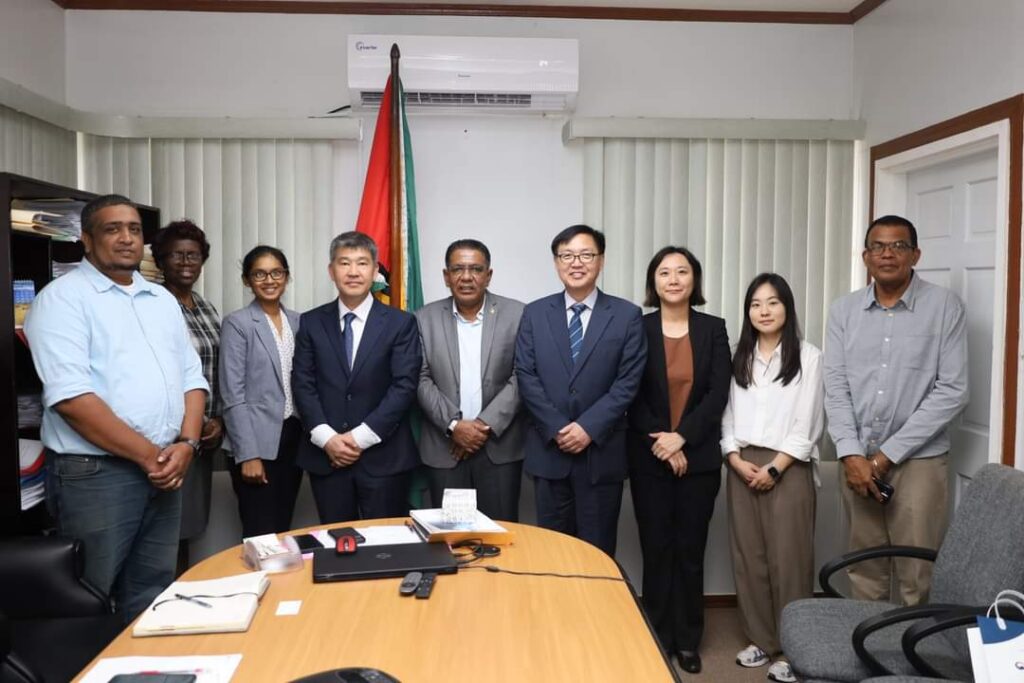
Article Content
Project Goal & Objectives
The project aims to protect, expand, and sustainably manage Guyana’s mangrove ecosystems and maximize the services they provide to the local communities to support the global fight against climate change.
Context & Background
Mangroves are a vital component of costal ecosystems, serving as nursery grounds for many fish species and providing several important ecological and economic services, such as, protecting coastlines from storm surges, reducing erosion, and sequestering carbon.
Approximately 90% of Guyana’s population and 75% of its agricultural land are located in the low-lying coastal areas. Seawalls and embankments remain highly necessary to protect these areas and their assets from flooding.
Since 2023, the Global Green Growth Institute (GGGI) and the Korea Forest Service (KFS) have been working together to develop climate-change related forest programs in Guyana, culminating in the signing of an agreement in May 2024 to launch the “Improving the resilience of vulnerable coastal communities and mangrove ecosystems to climate change related impacts in Guyana” project.
Project Outcomes
Outcome 1:
– Restoration of 120ha of the mangrove forest along 6Km of coastal line
– Development a package of Green-Grey solution related document
Outcome 2:
– Creation of 18 Green jobs in various business models
Outcome 3:
– Establish data acquisition, management, storage and analysis system
– Support to development of Integrated Coastal Zone Management plan
Outcome 4:
– Development and dissemination of green-grey solution, and Mangrove related knowledge product
– Produce of 15-minute video documentary showcasing the project’s impact
– Knowledge and experience sharing in regional and global level